


 Europe is the easiest continent in the world to backpack and one of the easiest to overspend in. Trains run on time, borders barely exist, and then you sit down for one coffee near a famous square and the bill wipes out half a dorm bed.
That’s the tradeoff. You can’t change it, but you can work around it.
We’d pick a hostel over most other places to stay even if money didn’t matter. Still, we know a lot of you book hostels because they’re the cheapest decent bed in town. Fair enough.
Want to travel Europe cheap? Have a look at our ultimate guide to hostels in Europe.
The hostel saves you money the moment you book it. What you do once you’re there decides how much more you save.
Here is a list of the…
to get you started.
Below are the tricks we actually use, some obvious, a few less so.
Travel Europe Cheap: 51 Tips
All 51 in a nutshell. Skip to whatever catches your eye, or just keep scrolling.
- Visit during off-season
- Book a hostel with free breakfast
- Find free stuff to do (before you go)
- Stay for free/housesit
- Check the tourism board
- Inclusions of a hostel = important!
- Bank fees?
- Cook meals yourself…
- …Don’t cook meals
- Eat out for lunch, not dinner
- Buddy up with travellers
- Pack snacks
- Book a bigger room
- Grab free stuff
- Use a locker
- Go to less touristy places
- Pick a cheap(er) country
- Join hostel events
- Be careful about souvenirs
- Slow down
- City passes & offers
- Subscribe to airlines
- …and Google flights
- Don’t stay in the city center
- Avoid roaming fees
- Guides for free things to do
- Walk more
- Avoid cabs
- Rent a bicycle
- Discount cards for public transport
- Visit free museums
- Local, free concerts
- Picnic in the park
- Avoid pub crawls
- Foursquare discounts
- Shop at local markets
- Book a hostel like a pro
- Read local travel blogs
- Free tours
- Go Couchsurfing
- Book transport in advance
- Share a ride
- Spend your coins wisely
- Take overnight trains/buses
- Get insured!
- Try the Trail Wallet app
- Pack a tent
- Don’t sit for a coffee
- Speak to hostel staff
- Be smart with currency leftovers
- Volunteer (+ $10 discount)
1. Visit Off Season
This one’s simple. Off season is cheaper, often a lot cheaper.
A bed in a Barcelona hostel in August can easily cost 25€. In January we’ve seen the same kind of bed drop to 6€-7€. Flights and transport follow the same pattern. You trade sunshine for space and money, and honestly, a quiet Barcelona in winter has its own charm.
2. Choose a hostel offering breakfast
Your parents were right about breakfast. If it’s included in the price, you don’t have to hunt for a café that’s open at 8am, and you skip one paid meal a day.
Even when it isn’t included, the hostel breakfast is usually cheaper than eating out at a local café. Usually worth it.
Most hostel breakfasts are nothing exciting: toast, juice, coffee, maybe fruit, yogurt or cereal if you’re lucky. Some hostels go all-out, though. Combo Bologna (formerly We Bologna, here’s our review) serves only local, high-quality products. And the coffee? We care about coffee a lot. It’s one of the best we’ve had in a hostel.
Fill up and you’re set for a long day of walking.
3. Research free and cheap stuff to do (ahead of time!)
You can spend a weekend or longer in plenty of big cities and never pay an entrance fee. Do a bit of reading first (okay, Googling) and you’ll probably come up with a great plan that costs next to nothing.
Wandering a quirky neighborhood for an afternoon is free. It’s also often the best part of the trip.
Check opening hours and days too. Lots of museums are free on a certain day of the week or after a certain hour.
A few guides to get you started (all include free and cheap options):
- 27 fun things to do in Santorini
- 29 FUN things to do in Lisbon
- 7 secret tips for London
- 61 cool things to do in Valencia
Need more ideas? Check out all of our travel guides here.
4. Find a free place to stay
Got friends or family somewhere interesting? Go visit. Or ask your friends to connect you with their friends in the city you want to see.
Don’t know anyone? You can look for a host in advance on these platforms:
Even better: try house and pet sitting. No rent, no bills, and usually a dog that’s happy to see you. Check out our full TrustedHousesitters review.
5. Remember the official tourism board
Search “visit (city name)” and you’ll usually land on the official tourism board.
Lots of cities sell some kind of visitor card with discounts on sights, restaurants and transport.
Depending on your plans, these can save a fair bit. Careful though: if you hate museum-hopping, a card like this mostly helps you spend money.
6. Carefully read up on what the hostel includes and doesn’t include
Most hostels give you sheets for free these days. Towels, not so much. Or you need WiFi to work on the road and this particular hostel charges for it.
In our opinion: No WiFi is a no-go!
Knowing this before you arrive means you pack the right stuff and don’t pay extra at reception.
Read: 46 tips to identify fantastic hostels
Start with the hostel’s own website, then read guest reviews. Hostelz is handy here: it puts the hostel’s details and prices from several booking sites on one page, so you can see what’s included without opening ten tabs.
7. Find out about potential bank fees
Bank fees catch a lot of first-time travelers off guard. Find out what your bank charges when you use an ATM abroad.
Tell your bank where you’re going, too. Cards get blocked for “suspicious activity” all the time when the bank doesn’t know you’re on the road.
Boring, we know. It still saves you trouble (and money) later.
8. Cook your meals yourself
Plenty of hostels have a guest kitchen with the basics (oil, salt…). Cooking there costs a fraction of eating out. Pasta is a hostel staple for a reason.
We like trying local specialties, so skip the supermarket now and then and shop at a local market. You can find seriously good food at very low prices.
There’s more. Many hostels run cooking classes or dinner nights. Join them. They’re usually cheap or even free, and you’ll probably leave with a few new friends.
Two we like: Hostel Ruthensteiner, one of the top hostels in Vienna, and Ani&Haakien, a hostel in Rotterdam. Both do dinner nights worth joining.

9. Don’t cook your own meals!
Wait, didn’t we just say the opposite? Sort of. It depends where you are.
In Eastern and Southern Europe, eating out can cost less than cooking. Spain has tapas. Italy has aperitivo.
Ask at reception what locals do. They’ll know.
A few ideas:
- Where to eat in Venice? 22 restuarants & tricks
- 39 ideas for Copenhagen: brunch, cocktails and blonde beer
- Tapas tips for Madrid

10. Eat out for lunch, not dinner
Lunch is often much cheaper than dinner for the same food. If you only eat one meal out a day, make it lunch.
Barcelona, Lisbon, Zagreb and pretty much all of Italy do a daily lunch menu. Plan around it.

11. Buddy up with other guests
Already buying groceries for dinner or doing laundry? Offer to split it with other guests. Cheaper, and it’s an easy way to start a conversation.
Same goes for getting home at night. Split between a small group, a taxi (or an Uber or Lyft) can cost less than public transport in some cities.
Some hostels have a blackboard where travelers post plans and requests: someone looking to share a cab to the airport, someone renting a car for a day trip. Keep an eye on it.

12. Pack some snacks with you
Sounds silly. Works, though.
Bring a few days’ worth of snacks, especially into notoriously expensive countries (Norway, anyone?). A bag of nuts from home beats a 6pm airport sandwich every time.
13. Don’t be afraid to book group rooms
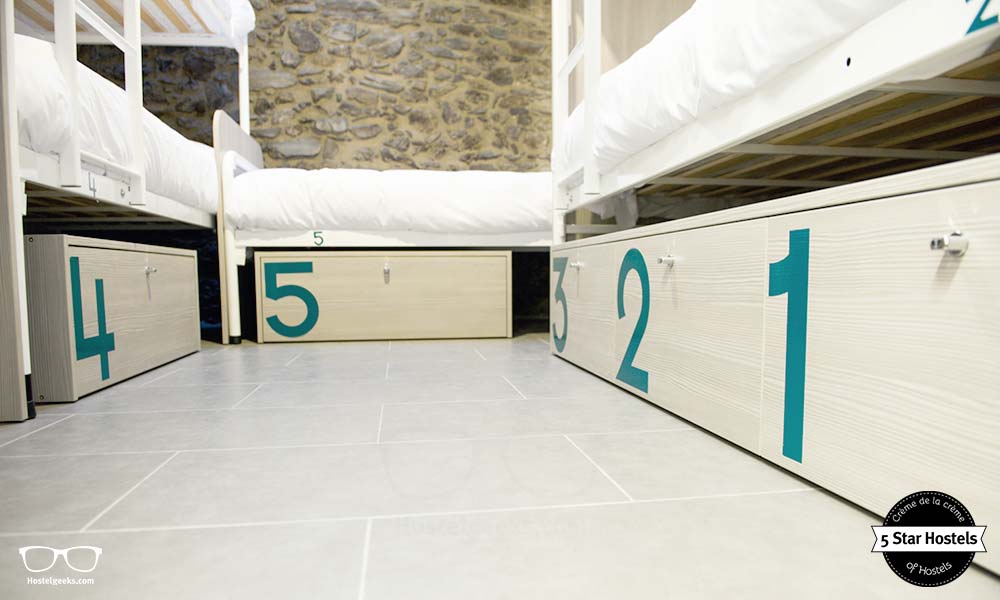
The biggest dorms have the cheapest beds. No surprise there. If it’s your first hostel, a 16-bed room sounds intimidating. If you’ve done this for years, it might just sound tiring.
But depending on the season, you might book a bed in a 16-bed room and find it half empty. It’s luck of the draw. A room that holds 16 people won’t always have 16 people in it.
And if it is full? Maybe it’s full of people you end up hanging out with all week. Or maybe it’s full of quiet, tidy, boring travelers, which is honestly the dream.
Either way, don’t rule out the big dorm. It’s rarely as bad as you expect.
Read: hostel etiquette, the unwritten rules
14. Free stuff that other travelers leave behind
People check out and leave things behind: big shampoo bottles, half a bag of pasta, the olive oil they didn’t want to carry. Some hostels keep a free shelf for exactly this.
Not sure if something’s up for grabs? Ask. Don’t be the guest who helps themselves to someone else’s food.
15. Take care of your stuff
Prevention is cheaper than replacing a stolen phone.
Hostels are generally safe. Still, you never know when you’ll share a room with someone who has sticky fingers.
We wrote a full article on “Are Hostels safe?” with 10 tips.
Leave expensive and irreplaceable things at home if you can, and use the lockers. They’re the easiest way to keep your valuables safe, so bring a padlock.
16. Stay in smaller, less touristy cities
Famous cities cost more than the towns next door. Thinking about Venice? Look at Mestre, right next to it and well connected by train.
Here’s our full guide to the best hostels in Venice, including the 5 star Combo Hostel.
If you only plan to be in the city during the day, staying nearby makes sense. If you want the nightlife, check first that public transport can get you back late.
Otherwise the cheap bed ends up costing you a taxi.
17. Consider Cheaper Countries
How about Albania, North Macedonia, Bosnia and Herzegovina or Poland?
All of them are great and none of them are expensive. Montenegro is one of my favorite countries in Europe, if I’m honest. Good food, plenty of beautiful landscapes, fair prices and not many tourist traps.
18. Special Events going on at the hostel
While you’re talking to the staff anyway, ask what’s on.
Maybe there’s a free barbecue for guests, or a happy hour that’s cheaper than any bar in town.
Some hostels also get discounts on tours or activities, like bike rentals.
Whatever’s going on is usually cheap. And often the most fun night of your stay.
19. Avoid Souvenirs aka. be creative with your souvenirs
Saves money and backpack space. That doesn’t mean no memories at all.
Need a new shirt anyway? Buy it in the city you just fell in love with. Not an “I love London” tourist shirt. A normal grey shirt from a normal shop.
Every time you wear it, you’ll remember where you bought it.
20. More slow travel
Moving slower is cheaper.
There’s no need to tick off a new city every day in Europe. Stay a few more days in one place instead, and you’ll mostly save on transport.
Think about where your money goes:
- accommodation
- transport
- activities
Food doesn’t really count, since you’d eat at home too. Sure, eating out and trying local dishes costs extra.
Transport is where slowing down really pays off. Getting on a bus or train every three days instead of every day adds up fast.
21. Transport: Compare City Passes and offers
Lots of cities sell a pass that covers transport, museums, sometimes even a free drink at certain restaurants. Read the fine print, because some of them are a genuinely good deal.
The first time I visited Amsterdam, I bought the Amsterdam card and used it constantly. I visited a lot of museums, so it saved me a lot.
You can buy city cards in advance over at GetYourGuide.
Sometimes it’s worth it even if you only see 2 museums and use the unlimited public transport.
It comes down to what you actually want to see. Compare that with what the pass covers, then decide.
22. Subscribe to Airlines…
European budget airlines run some ridiculous deals. We’ve scored flights to the Canary Islands for 25€, to London for 17€, and to Paris for even less: 12€.
The quickest way to catch them is the airlines’ own newsletters. Sign up for Ryanair, Norwegian, EasyJet and Vueling. Then watch your inbox.
23. …and Google Flights
Honestly, one of the best budget tips out there.
Google Flights shows you the cheapest flights from your airport. Pick your airport, budget and dates, and it lays out where you can go.
You can also set price alerts or keep a watch list of places you want to see.
24. Stay out of the city center
Show us a city center that isn’t pricier than the suburbs. A caña (small beer) near Puerta del Sol in Madrid costs more than the same beer a few metro stops away. At restaurants, bars and cafés you pay for the location too.
So skip the coffee in front of the Eiffel Tower, Big Ben or the Colosseum.
25. Avoid roaming fees
Roaming charges can wreck a budget fast.
Check with your phone provider before you leave so you know what you’ll pay.
The cheapest option is to use WiFi wherever you can. Most hostels have it for free these days.
Buying a local SIM card when you arrive is also a good idea. Inside the EU there’s free roaming, so a SIM from Spain works in France and other EU countries at no extra charge. The UK isn’t part of that anymore, so check before you cross.
Some countries make it harder to buy a SIM as a visitor, so read up on the rules for your first stop.
We also tested the Hippocket WiFi pocket hotspot for Europe and found it fast, cheap and simple to use. Here’s our full Hippocket WiFi Europe review.

26. Search for „Free Things to do in …“
Basic, we know.
Type “free things to do in” plus your destination into Google. You’ll get plenty of results.
The trick: don’t stop at page one. Pages 2, 3 and 4 are where the smaller sites live, and they tend to list the slightly different stuff.
We have a few free guides of our own:
- free things to do in Barcelona
- free things to do in London
- how to travel the world for free: top 10 tested ideas
27. Walk more!
A friend of ours walks everywhere. It gets a bit annoying after a while, but he swears he sees way more of a city that way. And he’s probably right. Think about that before you pay for…
28. Avoid Cabs
…an unnecessary cab ride. Sure, a cab ride can be an experience in itself. Especially when the driver decides to hunt down an iguana for dinner.
Most of the time, though, it’s just money you didn’t need to spend.
29. Rent a bike
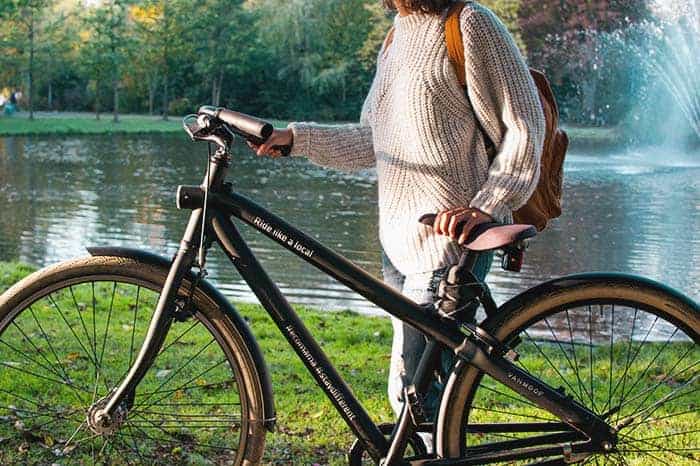
We like walking. We like cycling more. In bike-friendly cities like Haarlem, Amsterdam and Barcelona you can rent a bike for a few coins and cover the whole city in no time.
Learn the local rules first, though. Amsterdam’s bike lanes are not the place to figure it out.
30. Have a look for discount cards for public transport
Before buying single tickets, check for tourist passes covering a few days. Many cities also sell multi-ride tickets and student discounts.
31. Get to know the days for visiting museums for free
In a lot of European cities, Sunday is the free museum day. The official tourism board is the quickest place to check.
32. Check free concerts by local bands
Find out which websites locals use for gig listings. Facebook events are also good for finding what’s on around the city.
33. Have a picnic in the park
A picnic is always a good idea. Grab food and drinks at the supermarket, then find a park, a beach or a hill with a view. You’re on holiday, after all.

34. Avoid Pub Crawls
Okay, pub crawls and nightlife tours can be fun. We get it.
On a tight budget, though, skip them. Grab a drink with people from your hostel instead. It’s usually cheaper, and you already know the group.
35. FourSquare Discounts
We like Foursquare.
It’s less crowded than TripAdvisor and the other huge platforms, which is part of the appeal. You can search for places with special offers, like a free drink for checking in or a discount on the daily menu.
The other big plus is the lists. People rate places and make their own lists for food, bars and things to do. Search for those and steal the good recommendations.

Read: best travel apps
36. Shop at Local Markets (okay okay…not always cheaper!)
Not always cheaper. But you can find some really good deals. We mean the markets locals use, not the touristy ones. Local markets have local prices, and sometimes you get to try before you buy.
37. Book your Hostel like a pro
There are plenty of ways to pay less for the same bed. We wrote a whole article on it, with 11 booking hacks.
The short version: compare before you book. The same dorm bed can cost different amounts on different sites. We usually check on Hostelz first, because it compares the booking sites for you, and Hostelworld is a fine second option.
Read: how to book a hostel like a pro
38. Check out local travel blogs!
Is there a travel blogger living in your next destination? Read their blog.
You’ll usually find good ideas on things to do, plus local tips on transport, restaurants and special offers. Easy to underestimate.
39. Free Tours!
Free tours are tip-based tours run by locals or expats. Some are basic walking tours, others have a theme.
Highly recommended on day one. You get a feel for how the city fits together and a bit of its history.
One popular option in Europe is Sandemans Free Tours. There’s also a huge list of free walking tours across Europe.

40. Use Couchsurfing for Events
Couchsurfing is more than free accommodation.
It’s a community of like-minded travelers. Big cities like Barcelona, Paris and Madrid have plenty of Couchsurfing events. They’re usually free and held in cheap places.
Drinks at local prices, and a room full of expats, locals and other travelers.
41. Book transport in advance (or simply online!)
Some transport companies charge less if you book online, in advance, or both. Buses, ferries, planes, trains.
In Croatia we booked our ferries ahead and saved up to 30%.
Plenty of companies give up to 20% off just for booking online. That’s it. That’s the trick.
Check out Flixbus, a bus company connecting lots of European cities. Here’s our big Flixbus review.
Also, watch out for onward ticket rules. Some countries want proof of an onward flight before they let you in. No joke.
Onward Ticket lets you book a $12 flight ticket to use as proof, even though you won’t fly on it. And yes, it’s completely legal. Here’s our full review of Onward Ticket.
42. Share a ride
For places with few train or bus connections, try a carsharing service.
BlaBlaCar works well in Europe.
We used it from Barcelona to Marseille and from Marseille to Zurich, and met a lot of interesting people on the way. Read the driver reviews before you book. And stay flexible with your plans, because rides are easier to find that way.
43. 5€ can be more than 10€ – Spend your money wisely
Budget travel is a series of choices. No private room, so a 4-bed dorm instead. But sometimes spending more is the right call. Think of it as an investment. Other times, give it a pass.
If there’s a unique tour you really want to do, do it. Make up the difference later by skipping a bike rental or a round of drinks.
44. Take Overnight Trains/ Buses
One night of accommodation, saved.
In expensive countries that adds up quickly. You won’t sleep brilliantly. You’ll still be glad you did it.
Have you heard of Omio? It’s great for booking cheap transport around Europe: buses, trains and planes. Here’s our full review of Omio.
45. Make sure you are insured
Before buying insurance, check you don’t already have some.
If you’re a European citizen, you’re covered when traveling in Europe. Check with your social security system and make sure you carry the papers (or card) you need. Without them, you’ll pay your own medical bills in the country you’re visiting.
Private health insurance might also cover you abroad.
Not covered? Then get travel insurance. It feels like an extra cost right up until you need it.
Read: our reviews about HeyMondo and Safetywings.
46. Trail Wallet App – Keep track of your money
The most basic budget tip of all: know what you’re spending.
Trail Wallet is the app we like for this. It keeps track of your money and splits your spending into categories:
- Accommodation,
- transport,
- food,
- entertainment,
- and so on.
You can export your trip data to Excel, or just look at the charts to see where the money went. Sometimes that’s a little painful.
Give it a try. We really like it.
47. Take a Tent!
We asked the travel blog Big World Small Pockets for their best tip for saving money in Europe.
The answer was a tent. It’s an unusual one, but it can save you a lot on accommodation. Many hostels have camping spaces, so you still get to use the hostel facilities at a lower rate. You also get more personal space than in a dorm, and a hostel garden often beats a 16-bed shared room for surroundings.
Outside Europe, Australia, New Zealand and South Africa have lots of hostels with camping too.
48. Don’t sit for a coffee
In Italy, coffee has three prices.
Sitting at a table is the most expensive. Drinking it standing at the bar is in the middle. Take away is the cheapest.
Note: bring your own reusable (and collapsible) cup to cut down on plastic.

49. Make good use of the hostel staff’s resources
Ask the hostel staff. Seriously. That’s how we found so many hidden gems in Rhodes and got great tips for Bologna.
Most staff are more than happy to tell you what to do, see, eat and drink (especially at the 5 Star Hostels).
Tell them you’re on a tight budget when you ask. They might know a cheap, tasty local restaurant, or how to get discounted entry to the big sights. It never hurts to ask.
50. Pay attention to currency leftovers
Plan your spending so you don’t end up with a pocket full of leftover cash. Not all of Europe uses the euro:
- Switzerland: Swiss franc
- Croatia: euro
- Albania: lek
Banks usually only exchange notes, not coins. So spend the leftovers on snacks (especially when you’re heading from a cheaper country to a pricier one), or swap coins with other travelers or at the hostel reception.
51. Volunteering
A great way to save money, meet people and have a lot of fun.
Worldpackers is a great platform for finding volunteering spots in Europe and around the world.
It’s a community, too. You can try new things, pick up new skills in their online academy and read plenty of useful blog posts.
We’ve also teamed up with Worldpackers to get you a $10 discount. Extra-month offers on memberships come and go, so check what’s on before you buy.
We wrote a big guide on volunteering at hostels here.
And here’s our huge review of Worldpackers, so you know exactly what you’re getting before you sign up.
Psst! Make sure you use discount code “Hostelgeeks” when signing up.
Read our in-depth article on how to travel the world for free for more on Worldpackers, plus a comparison of the other big volunteer platforms.


Summary of traveling Europe cheap
That’s 51 ways to travel Europe cheap. I’m sure I’ve forgotten a few tricks, so don’t be shy, share yours with us.
Most of these work outside Europe too.
Our number 1 trick is still the hostel itself. Cheap beds, and the easiest place to meet other travelers.
Want more on traveling around Europe? We have plenty:
- worst travel tips ever: a FUN read
- long term travel insurance: the pros, cons and websites to use
- how to travel the world for free
- how to book hostels in 2026: a complete overview and saving tips